


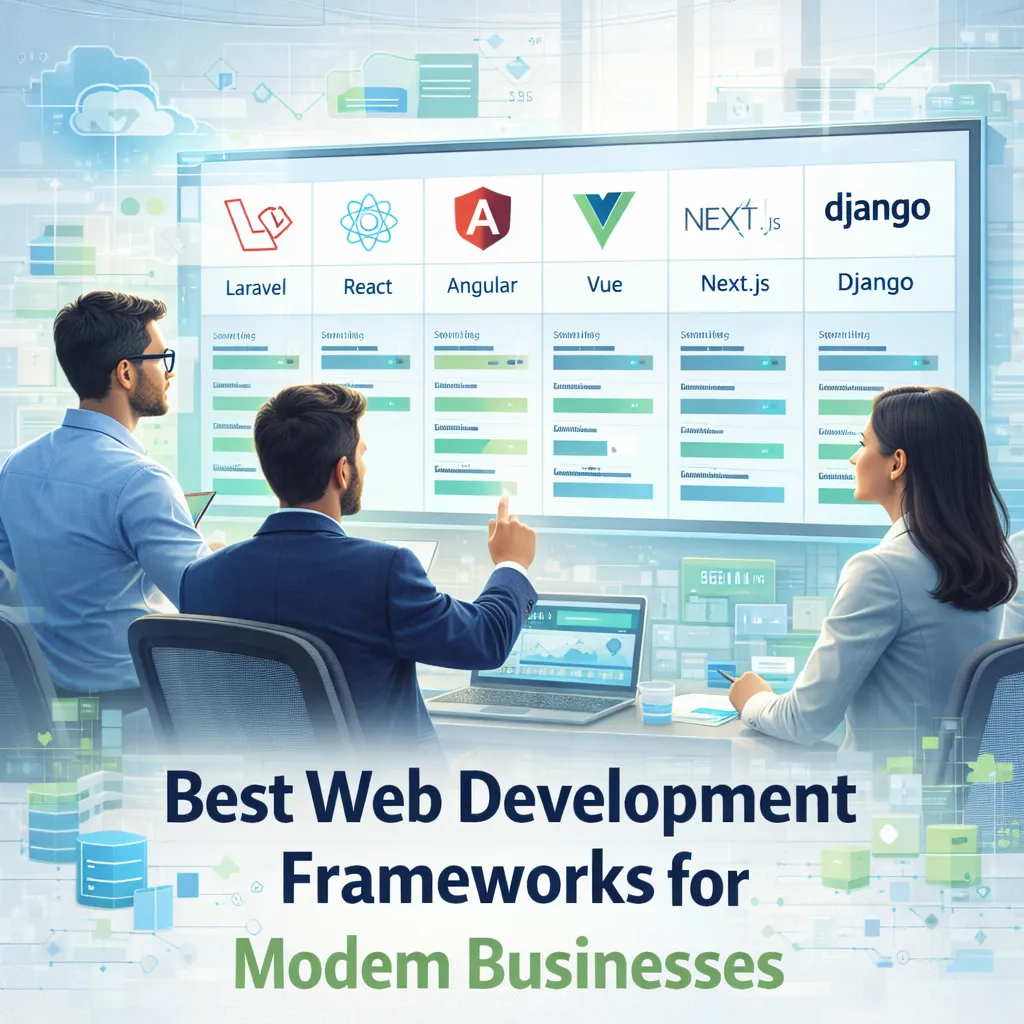
Best Web Development Frameworks for Modern Businesses
Choosing the right web development framework is one of the most important technical decisions a modern business can make. The framework you choose influences development speed, long-term maintenance costs, security, scalability, and how easily your product can evolve as the business grows. A poor choice can lead to technical debt, slow releases, and expensive rewrites. A good choice becomes a competitive advantage.
This guide explores the best web development frameworks for modern businesses, focusing on real-world use cases rather than hype. Instead of listing tools blindly, we will explain what makes a framework suitable for business growth and when each option makes sense.
What Makes a Framework Right for Modern Businesses?
Businesses today need more than just working code. They need systems that adapt.
Key criteria to evaluate frameworks
- Scalability: Can it handle growth in users and features?
- Maintainability: Is the codebase easy to understand and extend?
- Security: Does it follow secure defaults and best practices?
- Developer productivity: Can teams ship features quickly?
- Ecosystem: Are tools, libraries, and support available?
- Longevity: Is the framework actively maintained?
Modern businesses should prioritize frameworks that balance speed today with stability tomorrow.
Laravel: The Leading PHP Framework for Business Applications
Laravel is widely regarded as the most business-friendly PHP framework available today.
Why businesses choose Laravel
- Clean, opinionated architecture
- Built-in security features
- Powerful ORM and database tools
- Queue systems for background jobs
- Strong API development support
Laravel is ideal for startups, SaaS platforms, internal tools, and enterprise applications that require long-term scalability.
Best use cases
- Custom business platforms
- SaaS products
- API-driven systems
- Enterprise dashboards
React: Frontend Power for Dynamic User Interfaces
React is one of the most popular frontend frameworks for building interactive user interfaces.
Why React works for businesses
- Component-based architecture
- Strong ecosystem and community
- Reusable UI components
- Excellent performance for dynamic apps
React excels when businesses need rich user experiences and fast interactions.
Best use cases
- Single-page applications
- Customer dashboards
- Admin panels
- Frontend for API-based backends
Next.js: React Framework for SEO and Performance
Next.js builds on React and adds server-side rendering and static generation.
Why businesses adopt Next.js
- Improved SEO out of the box
- Faster page loads
- Hybrid rendering options
- Excellent developer experience
Next.js is especially valuable for marketing-driven and SEO-focused businesses.
Best use cases
- Marketing websites
- Content-heavy platforms
- SaaS landing pages
Vue.js: Balanced Simplicity and Power
Vue.js is known for its gentle learning curve and flexibility.
Why businesses like Vue
- Easy to adopt incrementally
- Clean syntax
- Good performance
- Strong documentation
Vue works well for teams that want modern frontend features without excessive complexity.
Best use cases
- Small to mid-sized applications
- Progressive enhancement of existing sites
- Internal tools
Django: Rapid Development With Strong Defaults
Django is a mature Python framework designed for rapid, secure development.
Why Django fits business needs
- Security-first philosophy
- Built-in admin interface
- Batteries-included approach
- Strong ORM and authentication
Django is often chosen for data-heavy and logic-rich applications.
Best use cases
- Data-driven platforms
- Internal enterprise systems
- Projects with heavy business logic
Ruby on Rails: Convention Over Configuration
Ruby on Rails focuses on developer productivity through strong conventions.
Why Rails is still relevant
- Rapid prototyping
- Readable, expressive code
- Mature ecosystem
Rails remains popular among startups and product-focused teams.
Best use cases
- Startups and MVPs
- SaaS platforms
ASP.NET Core: Enterprise-Grade Framework
ASP.NET Core is Microsoft’s modern framework for building scalable web applications.
Why enterprises choose ASP.NET Core
- High performance
- Strong security model
- Excellent tooling
- Long-term support
This framework is particularly strong in corporate and regulated environments.
Best use cases
- Enterprise systems
- Large internal platforms
- Long-term government or corporate projects
Comparing Frameworks at a Glance
| Framework | Primary Strength | Best For |
|---|---|---|
| Laravel | Scalable backend development | Business applications, SaaS |
| React | Dynamic user interfaces | SPAs, dashboards |
| Next.js | SEO and performance | Marketing and content sites |
| Vue.js | Simplicity | Mid-sized apps |
| Django | Security and rapid development | Data-driven systems |
| ASP.NET Core | Enterprise stability | Large corporate platforms |
How to Choose the Right Framework for Your Business
There is no universal “best” framework. The best choice depends on your context.
- Team experience and skills
- Project complexity
- Time-to-market requirements
- Long-term maintenance expectations
- Integration needs
A framework should support your business strategy, not dictate it.
Common Mistakes Businesses Make When Choosing Frameworks
- Choosing based on trends alone
- Ignoring long-term maintenance
- Over-engineering simple projects
- Underestimating scalability needs
FAQ: Web Development Frameworks
1) Is it risky to choose a less popular framework?
Yes. Smaller ecosystems can limit support and future hiring.
2) Can frameworks be combined?
Yes. Many systems use different frameworks for frontend and backend.
3) Should businesses always choose the newest framework?
No. Stability and community matter more than novelty.
4) How important is performance when choosing a framework?
Very important, but architecture matters more than raw speed.
5) Can a framework limit business growth?
Yes, if it does not scale well or becomes hard to maintain.
6) Is custom development better than frameworks?
Frameworks usually reduce cost and risk compared to building everything from scratch.
Conclusion: Frameworks Should Enable Growth
Choosing among the best web development frameworks for modern businesses is a strategic decision, not just a technical one. The right framework accelerates development, improves quality, and supports long-term scalability.
Businesses that align framework choice with their goals, team skills, and growth plans avoid costly rebuilds and technical debt. For modern performance and usability standards, explore https://web.dev/.